Fiber Laser vs. Waterjet Cutting: A Technical Deep Dive for Manufacturing
Cutting technology is critical in modern manufacturing, and two popular CNC profiling methods are fiber laser cutting and waterjet cutting. Both processes offer unique advantages in terms of speed, precision, and material capabilities. This deep dive compares fiber lasers and waterjets across key technical aspects—helping engineers, procurement specialists, and production managers decide which machine is more cost-effective and technically suitable for their parts or projects.
Material Compatibility
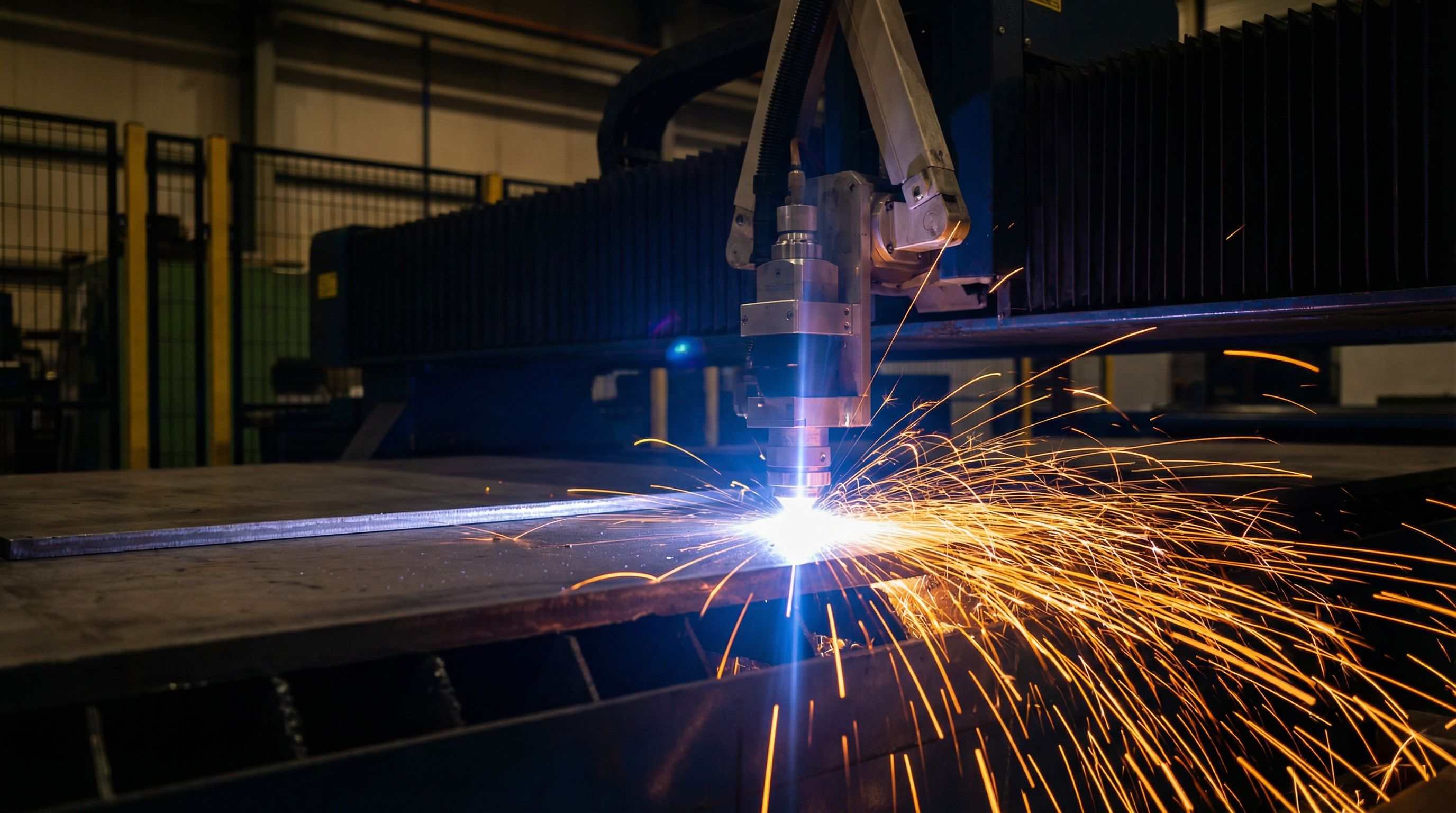
Fiber Laser Cutting: Fiber lasers excel at cutting metals. They generate a high-power laser beam (usually ~1 μm wavelength) that is well absorbed by metals like steel, stainless steel, aluminum, brass, copper, and titanium. Fiber lasers can cleanly cut most metals up to about 0.5 inches (12 mm) thick, and with very high-power systems can even approach ~30–40 mm thickness on steel. They are particularly efficient for sheet metals and medium plate. Modern fiber lasers can also handle reflective metals (like copper or brass) that were challenging for older CO2 lasers. Non-metal cutting with fiber lasers is more limited – while they can cut some plastics or organics (e.g. thin acrylic, wood or composites) if the material absorbs the laser, this is not their strong suit.
Waterjet Cutting: Waterjets can cut virtually any material by using a high-pressure water stream, often with abrasive grit. This makes waterjet one of the most versatile cutting methods. Metals (steel, aluminum, brass, titanium, etc.) of almost any thickness are cuttable by waterjet – even very thick plate (>1–4 inches). Abrasive waterjets easily cut hard materials like stone, granite, ceramic tile, glass, and concrete, which are impossible or impractical to cut with lasers. Waterjets are also ideal for soft or heat-sensitive materials: they can cut rubbers, foams, plastics, wood, composites (fiberglass, carbon fiber), and even layered or laminated materials without melting or delamination.
Thickness Capability
Fiber lasers are best suited for thinner materials. Beyond ~0.75 inches (19 mm) of steel, lasers 'run out of power' or slow down significantly. Waterjets, by contrast, can cut very thick sections (2–4 inches common, up to ~12 inches/300 mm max). The trade-off is speed: cutting extremely thick material with waterjet is slow (the water/abrasive must erode through the full depth), but it's often the only option when laser or other methods max out.
Precision and Tolerances
Both fiber lasers and waterjets are CNC-controlled and capable of high precision, but fiber lasers generally achieve tighter tolerances and finer details than waterjet.
Fiber Laser Precision: The laser's beam is extremely narrow (often ~0.007–0.015′′ diameter, ~0.15–0.4 mm). This yields a very small kerf (material removal width), allowing for sharp detail and minimal waste. Typical kerf width for fiber lasers is on the order of 0.1 mm (0.004′′) or even less. High-quality laser cutters can hold tolerances around ±0.002–0.005′′ (±0.05–0.1 mm) on many parts. The small beam size also means lasers can cut very intricate shapes (fine cutouts, tight radii) that might be impossible with a thicker tool.
Waterjet Precision: Abrasive waterjets have a larger cutting beam (the water stream with abrasive). The kerf of a waterjet is typically ~0.020–0.040′′ (0.5–1.0 mm), several times larger than a laser's kerf. Thus, fine features or very small holes (<1 mm) may not cut cleanly or could 'wash out' with a waterjet. Tolerances for waterjet-cut parts are often around ±0.005–0.010′′, with high-end machines achieving ~±0.008′′ (±0.2 mm) on typical jobs.
Edge Quality
Both methods produce good edge finish, but there are differences. Laser-cut edges are smooth and may have a slightly heat-hardened recast surface. With the right parameters (especially using inert assist gas like nitrogen), laser edges come out clean and smooth, often requiring minimal or no finishing. However, if cut with oxygen (common for thick mild steel), a laser can leave a thin oxide layer or some dross that might need a quick grind or brush.
Waterjet-cut edges are pristine in terms of metallurgy (no heat) and have a matte, sand-blasted appearance from the abrasive. They are often described as clean and smooth, with no burr. In many cases, no post-processing is required for a waterjet edge. On thick cuts, there may be minor striations (lines) on the cut face due to the jet's action, and a slight roughness comparable to a fine grinding finish.
Cutting Speed
One of the biggest differences between fiber lasers and waterjets is cutting speed, especially on thinner materials. Fiber lasers cut extremely fast, thanks to the concentrated energy of the laser beam. For sheet metal under ~1/2′′ thick, laser cutting speeds are often in the range of 20 to 70 inches per minute (ipm). In thin gauge metal (e.g. 1–2 mm stainless), a high-power fiber laser can be dozens of times faster than a waterjet.
Waterjet cutting is significantly slower than laser on thin-to-medium thicknesses. Typical cutting speeds are around 1 to 20 ipm for most materials. Even on under-1′′ stock, a waterjet might cut at 20 ipm versus a laser's 70 ipm. The difference grows for thin sheets: lasers zip through thin metal, whereas waterjet still has to erode material at a limited rate.
Operating Costs
Fiber Laser Operating Costs: Fiber lasers are generally cost-efficient for thinner materials and high-volume production. Energy consumption is relatively efficient (up to ~40% of input power is converted to laser output). A typical laser cutter might use 1.5–10 kW of electrical power while cutting. Assist gas (oxygen or nitrogen) is required, which can add to costs. However, fiber lasers have relatively low consumable cost and maintenance needs compared to waterjets.
Waterjet Operating Costs: Waterjets tend to have higher operating costs due to consumables and wear components. The garnet abrasive used in abrasive waterjet cutting is the single biggest cost driver, often accounting for ~70% of operating cost. Abrasive is used at a rate of about 0.5–1.0 kg per minute. Waterjet pumps draw significant electrical power to pressurize water to 50,000–60,000 psi. In total, a waterjet might have operating costs around $30–$40 per hour when you add up abrasive, power, water, and wear parts.
Heat-Affected Zone (HAZ)
Fiber Laser HAZ: Laser cutting is a thermal process that creates a heat-affected zone along the cut edge. The HAZ is typically narrow (0.5–1 mm wide or less), but its effects can be significant. Any pre-existing heat treatment in the metal will be locally lost adjacent to the laser cut. For example, if you laser-cut through a hardened steel or a tempered aluminum alloy, the extreme heat will anneal/soften the metal right at the cut edge.
**Waterjet HAZ:** Waterjet cutting is a cold cutting process; there is no heat input to the material. This means no heat-affected zone at all – the material's intrinsic properties (hardness, temper, microstructure) remain unchanged right up to the cut edge. This is a major advantage when working with heat-sensitive materials or components that have been pre-heat-treated.
Environmental and Safety Factors
Laser cutting produces fumes, smoke, and particulates that require good ventilation and filtration. The by-product is usually slag/dross that falls into a tray. Waterjet produces no fumes at all but generates a mixture of water, abrasive grit, and fine particles as sludge. The water is typically recirculated in a closed loop.
Fiber laser cutting is relatively quiet (around 75 dB). Waterjet cutting is significantly louder, potentially exceeding 95-100 dB, though underwater cutting can reduce noise to 75-80 dB. Both machines require strict safety measures: laser safety for beam exposure and fire risks, waterjet safety for high-pressure hazards and hearing protection.
Best Applications
Choose Fiber Laser for: - Metal sheet fabrication up to ~0.5′′ thick - High precision parts requiring tight tolerances - High-volume production where speed is critical - Parts that need minimal cleanup - Materials that can handle heat effects
Choose Waterjet for: - Thick metal plates (>1-4 inches) - Non-metal or mixed materials - Heat-sensitive parts - Parts requiring no heat-affected zone - Lower volume or one-off jobs with varied materials
Conclusion
Both fiber laser and waterjet cutting are powerful technologies in manufacturing, each with distinct strengths. Fiber lasers offer unmatched speed and precision on metals, with a low operating cost per part for high-volume and thin material jobs. Waterjets provide unmatched versatility, able to cut almost any material without heat, at the cost of slower processing and higher consumable usage. The choice between them depends on your specific material, thickness, accuracy requirements, and production volume. For many manufacturers, the ideal solution is to leverage both technologies – using laser cutting for what it does best and waterjet cutting for what it does best – ensuring all part requirements can be met in the most cost-effective way.