The Evolution of Sheet Metal Fabrication: From Manual Work to Automated Precision
Sheet metal fabrication has come a long way from its humble beginnings. What started as a manual process involving hand tools and rudimentary techniques has evolved into a sophisticated industry driven by automation and precision. This evolution has been fueled by technological advancements, increasing demand for complex metal components, and the need for greater efficiency and productivity.
Historical Foundations
The roots of sheet metal fabrication trace back to ancient civilizations, with evidence of early metalworking found in artifacts from various cultures. The ancient Egyptians were particularly skilled, using sheet metal to create intricate jewelry and decorative items. A significant milestone came in the 14th century when Leonardo da Vinci conceptualized the rolling mill, predating the actual implementation of such technology in the 16th century for producing uniform gold sheets.
Early Manufacturing Techniques
- Manual forging and hammering for shaping metal sheets
- Basic press brakes for creating predetermined bends
- Primitive stamping presses using molds for specific shapes
- Traditional cutting methods including sawing and shearing
- Puddling technique for processing cast iron
The Industrial Revolution's Impact
The Industrial Revolution marked a pivotal moment in sheet metal fabrication. The invention of the Bessemer process in 1857 revolutionized steel production, making it more affordable and accessible. This led to increased demand for sheet metal components, particularly in machinery and steam engine construction. The period saw the emergence of steam-powered shears, nibbling devices, and the first hydraulic press by Joseph Bramah in 1770.
Modern Automated Systems
| Technology | Primary Use | Key Advantage |
|---|---|---|
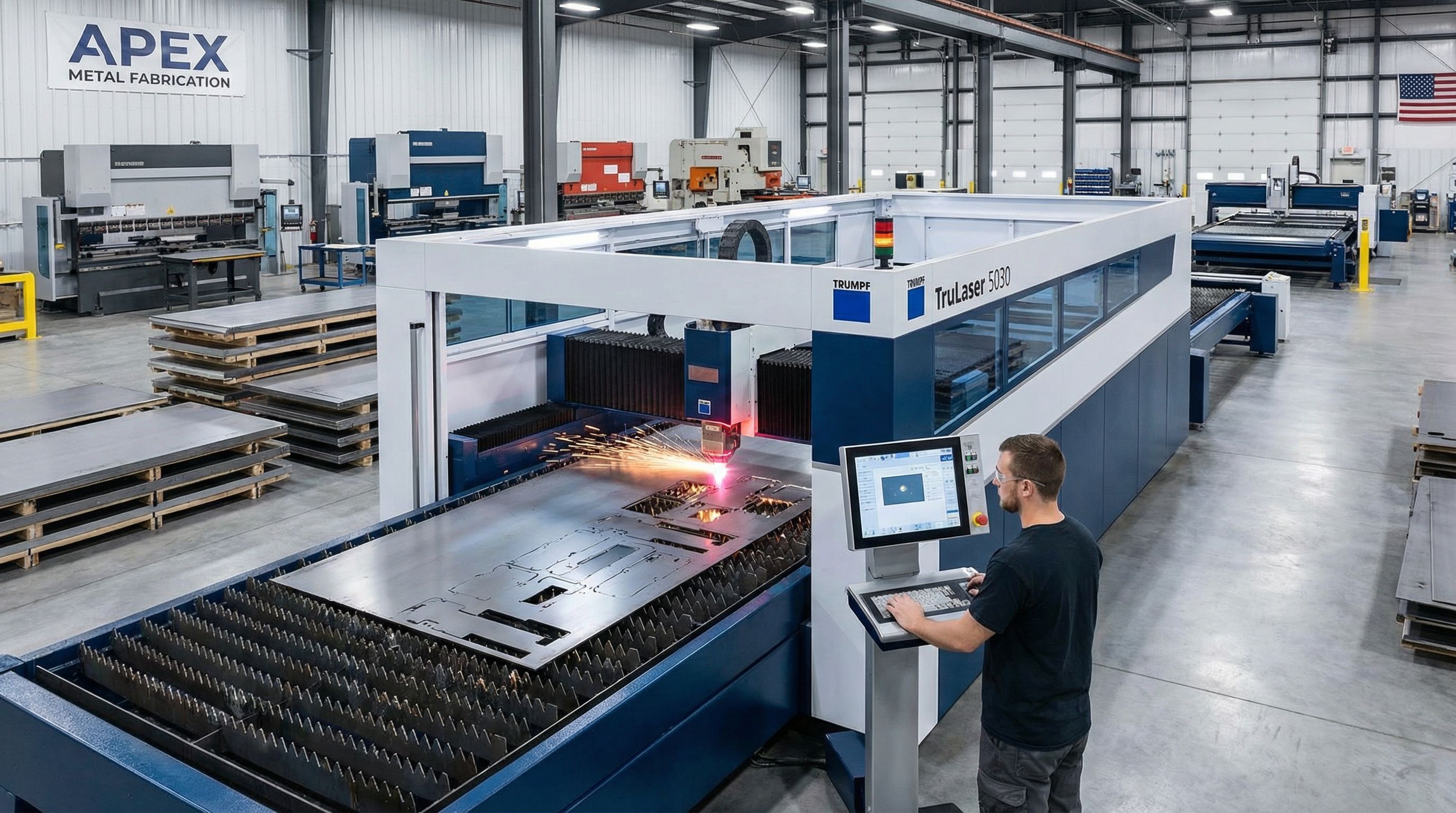
| CNC Laser Cutting | Precision cutting | Complex shapes with high accuracy |
| Automated Press Brakes | Metal forming | Consistent bend angles |
| Robotic Welding | Joining | High-speed, precise welds |
| Automated Material Handling | Transport | Efficient workflow |
Benefits of Modern Automation
- Increased productivity and output capacity
- Enhanced precision and repeatability
- Improved workplace safety
- Reduced material waste
- Greater manufacturing flexibility
- Consistent product quality
Industry 4.0 Integration
Today's sheet metal fabrication is being transformed by Industry 4.0 technologies. Smart machines with IoT connectivity enable real-time monitoring and data analytics. AI and machine learning algorithms optimize processes, predict maintenance needs, and improve overall efficiency. These advancements are creating smarter, more connected manufacturing environments.
Future Trends
- AI-driven process optimization
- Advanced robotics and cobots
- Digital twin technology
- Predictive maintenance systems
- Sustainable manufacturing practices
- Enhanced quality control through machine learning
While automation continues to advance, the human element remains crucial in sheet metal fabrication. Skilled operators, programmers, and engineers work alongside automated systems, combining technical expertise with machine precision to achieve optimal results. This collaboration between human insight and automated efficiency represents the future of metal manufacturing.